

USP (United States Pharmacopoeia) and EP (European Pharmacopoeia) standards, recommend the use of bioindicators during VHP sterilization processes of pharmaceuticals, drugs in vials, culture media, medical instruments and more.
What is hydrogen peroxide sterilization?
VHP sterilization is a low‑temperature sterilization process that uses vaporized hydrogen peroxide as a powerful oxidizing agent to inactivate a broad spectrum of microorganisms without exposing heat‑sensitive materials to high temperatures. This method is especially suitable for medical, pharmaceutical, and laboratory instruments that cannot withstand traditional steam sterilization.
- Poliflex coupons
These coupons BIs use a poliflex support that is not permeable to hydrogen peroxide. Poliflex coupon has been inoculated with Geobacillus stearothermophilus (ATCC 7953) spores and has been introduced into a Tyvek®/Polytene envelope. Tyvek® side of the envelope is permeable to hydrogen peroxide vapors, while the Polytene side of the envelope is not. They are manufactured under strictly controlled conditions to comply with the current editions of USP and EP, and in accordance with ISO 11138 and EN 866 standards.
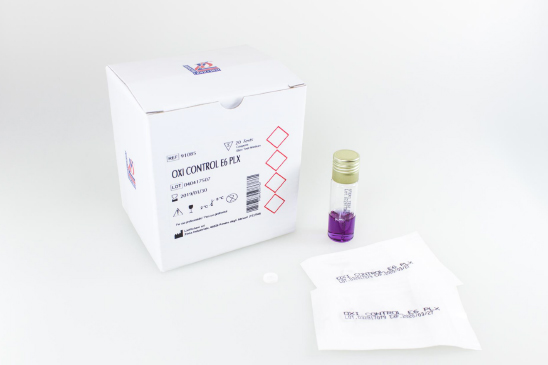
- Glass coupons
These coupons BIs use a glass support that is not permeable to hydrogen peroxide. Glass coupon has been inoculated with Geobacillus stearothermophilus (ATCC 7953) spores and has been introduced into a Tyvek® /Polytene envelope. Tyvek® side of the envelope is permeable to hydrogen peroxide vapors, while the Polytene side of the envelope is not. They are manufactured under strictly controlled conditions to comply with the current editions of USP and EP, and in accordance with ISO 11138 and EN 866 standards.
- Steel coupons
These coupons BIs use a staineless-steel support that is not permeable to hydrogen peroxide. Steel coupon has been inoculated with Geobacillus stearothermophilus (ATCC 7953) spores and has been introduced into a Tyvek® /Polytene envelope. Tyvek® side of the envelope is permeable to hydrogen peroxide vapors, while the Polytene side of the envelope is not. They are manufactured under strictly controlled conditions to comply with the current editions of USP and EP, and in accordance with ISO 11138 and EN 866 standards.
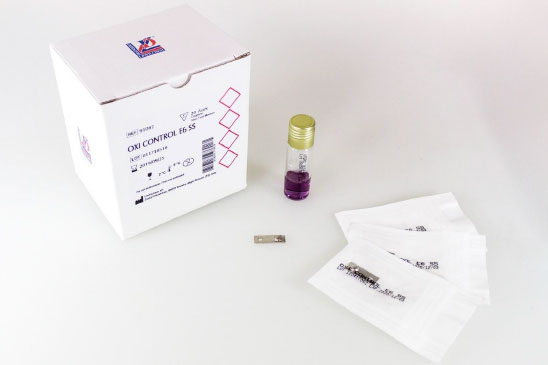
- Aluminium coupons
These coupons BIs use an aluminium support that is not permeable to hydrogen peroxide. Aluminium coupon has been inoculated with Geobacillus stearothermophilus (ATCC 7953) spores and has been introduced into a Tyvek® /Polytene envelope. Tyvek® side of the envelope is permeable to hydrogen peroxide vapors, while the Polytene side of the envelope is not. They are manufactured under strictly controlled conditions to comply with the current editions of USP and EP, and in accordance with ISO 11138 and EN 866 standards.
- PVC coupons
These coupons BIs use a polyvinyl chloride support that is not permeable to hydrogen peroxide. PVC coupon has been inoculated with Geobacillus stearothermophilus (ATCC 7953) spores and has been introduced into a Tyvek® /Polytene envelope. Tyvek® side of the envelope is permeable to hydrogen peroxide vapors, while the Polytene side of the envelope is not. They are manufactured under strictly controlled conditions to comply with the current editions of USP and EP, and in accordance with ISO 11138 and EN 866 standards.
- Strips
These BIs are special filter paper strips, inoculated with Geobacillus stearothermophilus (ATCC 7953) spores in predefined concentrations and contained into a Tyvek®/Polytene envelope. Tyvek® side of the envelope is permeable to hydrogen peroxide vapors, while the Polytene side of the envelope is not. They are manufactured under strictly controlled conditions to comply with the current editions of USP and EP, and in accordance with ISO 11138 and EN 866 standards.
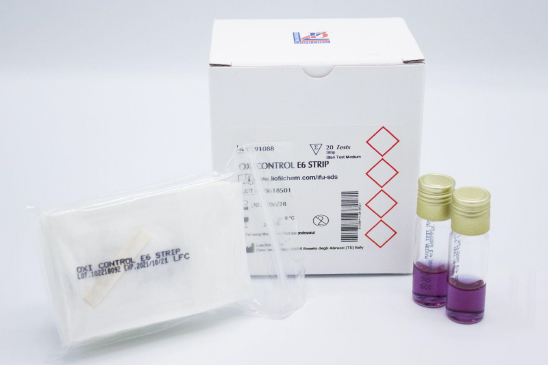
- Spore suspensions
Spore suspensions consist of Geobacillus stearothermophilus (ATCC 7953) spores suspended in distilled water in predefined concentrations. They are manufactured under strictly controlled conditions to comply with the current edition of USP and in accordance with ISO 11138 and EN 866 standards.